


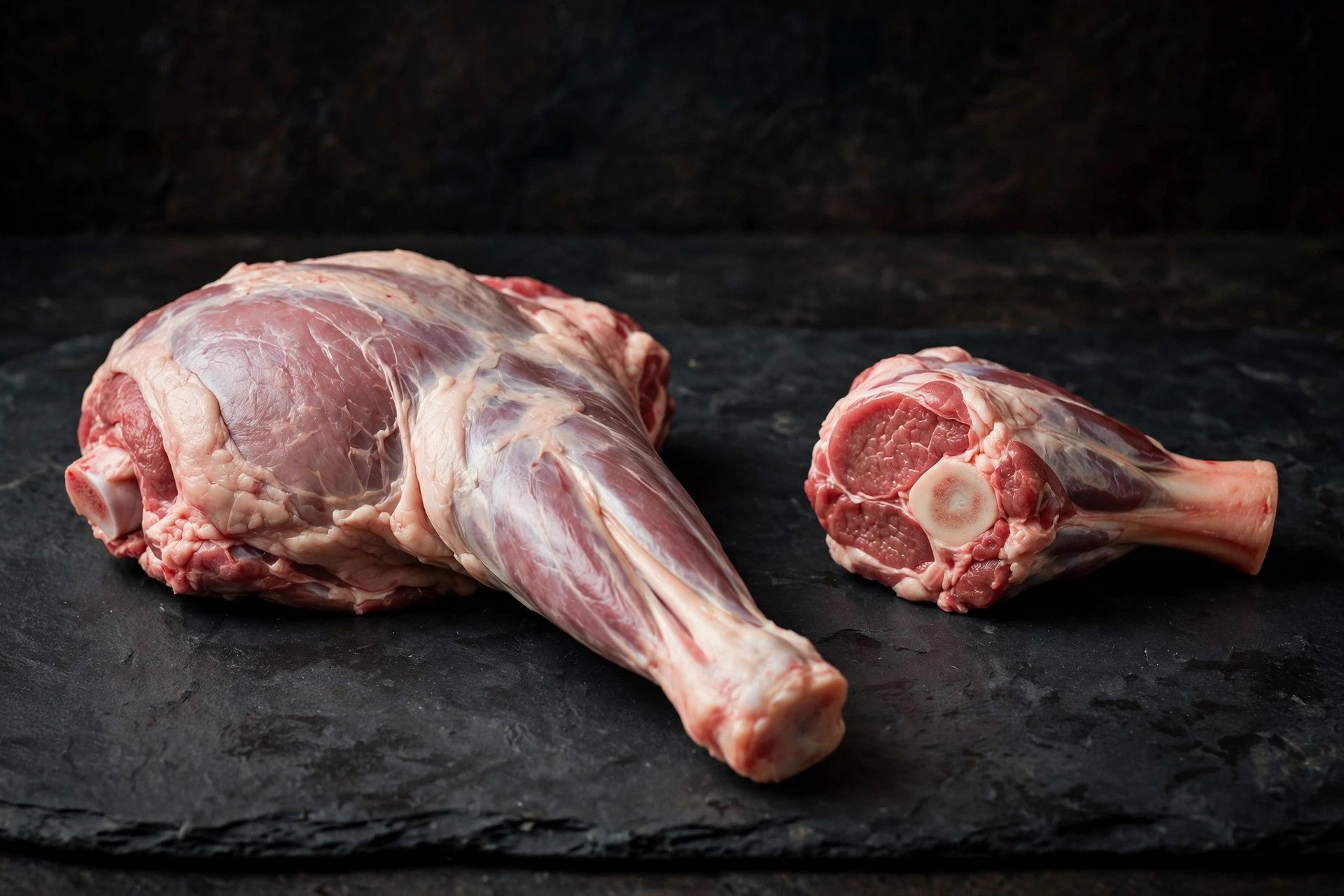
Start with the leg: two cuts, two uses
Lamb leg and lamb shank both come from the leg of the lamb, but they are used very differently. Lamb leg boneless is taken from the hind leg and comes without the bone, which makes it easy to handle and cook. Lamb leg bone in keeps the bone, which adds flavour during cooking and helps keep the meat moist and juicy. Lamb shank is cut from the lower part of the leg, just below the knee, and is known for its rich taste and the connective tissue that adds depth of flavour when cooked slowly.
Before choosing a product, note your best-selling dishes, target portions, cooking methods, and receiving schedule. This helps your kitchen choose lamb cuts that are easier to use consistently every day, and makes it simpler to discuss requirements with our team.
- Lamb leg boneless — boneless hind leg, tender and flavourful; ideal for roasting, grilling, or braising, and can be roasted whole, rolled, or cut into steaks.
- Lamb leg bone in — bone-in leg; the bone adds flavour and keeps the meat moist and juicy; for roasting, grilling, or braising.
- Lamb shank — lower leg below the knee; rich taste with connective tissue that becomes tender in slow cooking; for braised, roasted, or slow-cooked dishes.
Prioritize consistency, then plan portions before ordering
For hotels, restaurants, and caterers, consistent cuts make food-cost planning easier and keep plating predictable. Use estimated portions, menu frequency, and ingredient needs per serving as a starting point, then match order quantities to the menu rotation in place.
Availability can change with stock conditions. Use this guide to plan your needs, then confirm products, prices, and delivery timing through WhatsApp before ordering.
Lamb Leg vs Lamb Shank for Professional Kitchens
Use this table as a starting point when planning ingredients. The final choice should fit your menu and current availability.
| Cut | Characteristics | Best For | Availability |
|---|---|---|---|
 Lamb Leg Boneless | Boneless cut from the hind leg; tender and flavourful, easy to handle and cook. | Roasting, grilling, braising; roasted whole, rolled, or cut into steaks. | Check availability |
 Lamb Leg Bone In | Bone-in leg; the bone adds flavour and keeps the meat moist and juicy. | Roasting, grilling, or braising. | Check availability |
 Lamb Shank | From the lower leg below the knee; rich taste with connective tissue that adds depth of flavour when cooked slowly. | Braised, roasted, or slow-cooked dishes. | Check availability |


